
When water invades your home — whether from a burst pipe, appliance failure, roof leak, or storm surge — the clock starts immediately. The actions you take in the first 24 hours can mean the difference between a manageable cleanup and a catastrophic loss. Mold can begin growing in as little as 24 to 48 hours, making fast response absolutely critical.
At Sano Steam Cleaning & Restoration, we provide 24/7 emergency water damage response across the Wilmington area. Here's what to do — and what not to do — in those critical first hours.
Immediately: Ensure Safety First
- Turn off electricity to affected areas if you can safely reach the breaker panel. Water and electricity are a lethal combination.
- Don't walk through standing water if there's any chance the electrical system is compromised
- Wear rubber boots and gloves if you must enter a flooded area — floodwater may contain sewage, chemicals, or other hazards
- If the damage is from natural flooding, be aware that floodwater is Category 3 ("black water") contaminated water. The Federal Emergency Management Agency (FEMA) provides guidance on flood safety at Ready.gov
Hour 1-4: Stop the Source and Document
Stop the Water
- Shut off the main water supply if the source is a plumbing failure
- If it's a roof leak, place buckets and move valuables out of the way
- For appliance failures (water heater, washing machine, dishwasher), shut off the appliance's water supply valve
Document Everything
- Take photos and video of all damage before you touch anything. Your insurance company will need this documentation.
- Photograph water levels, damaged walls, flooring, furniture, and personal belongings
- Note the time the damage occurred or was discovered
- Save damaged materials — don't throw anything away until the insurance adjuster has documented the loss
Call Your Insurance Company
Report the claim as soon as possible. Most policies require prompt notification. Ask about coverage for emergency mitigation — most homeowner's policies cover the cost of professional water extraction and drying, even before the adjuster visits.
Hour 4-12: Begin Mitigation
Remove Standing Water
If the water volume is manageable, use a wet/dry vacuum, mop, or towels to remove as much standing water as possible. For significant flooding, you need professional extraction equipment — call us at (910) 350-0000 for 24/7 emergency response.
Increase Air Circulation
- Open windows if weather permits and humidity is lower outside than inside
- Run fans to circulate air across wet surfaces
- Turn on your HVAC system (if it's safe to do so) to help with dehumidification
- Do NOT use your home's central heat to "dry things out" — this increases humidity and accelerates mold growth
Protect Your Belongings
- Move furniture off wet carpet (place aluminum foil or blocks under legs to prevent staining)
- Remove area rugs from wet floors
- Move electronics, books, documents, and photos to dry areas
- Hang wet clothing and fabrics to air-dry
Hour 12-24: Professional Assessment
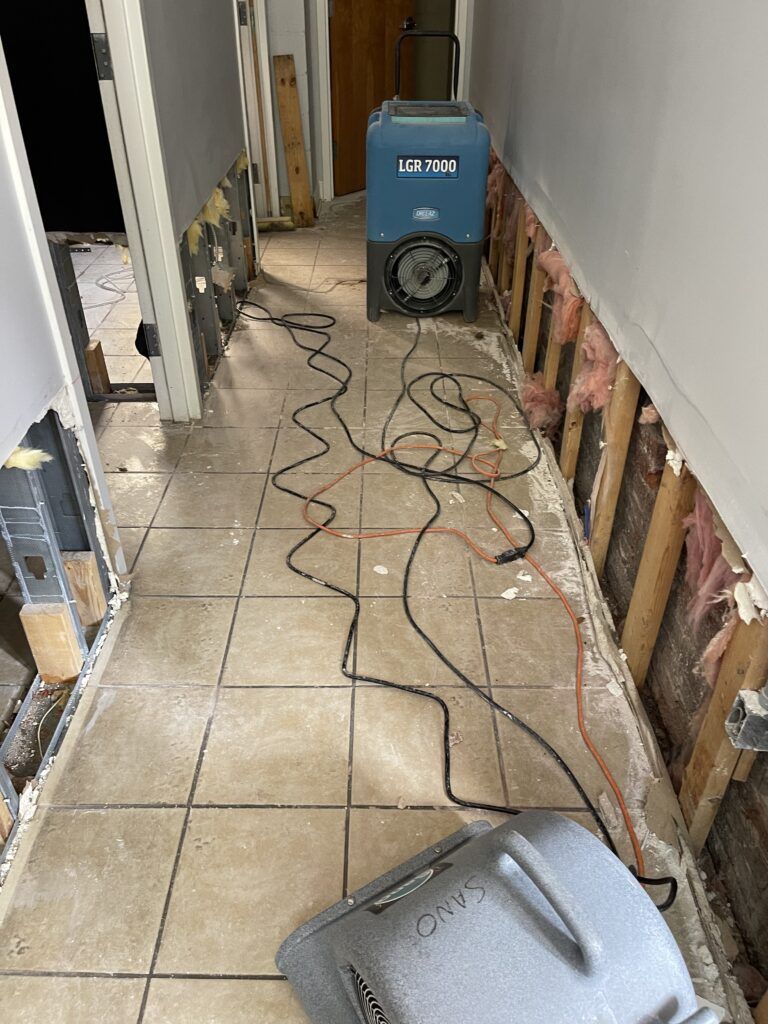
Within the first 24 hours, a professional restoration company should assess the damage using moisture meters and thermal imaging. At Sano Steam, our water damage restoration team follows the IICRC S500 Standard for professional water damage restoration. This includes:
- Moisture mapping: Using specialized meters to determine the full extent of water penetration — often much larger than what's visible
- Water classification: Determining whether the water is clean (Category 1), gray (Category 2), or contaminated (Category 3), which dictates the restoration approach
- Structural drying setup: Industrial dehumidifiers and air movers positioned according to drying science
- Antimicrobial treatment: Preventing mold growth in the critical early window
What NOT to Do
- Don't wait to see if it dries on its own. Water wicks into walls, subfloors, and insulation. What looks dry on the surface may be saturated underneath.
- Don't use a household fan and hope for the best. Residential equipment can't remove moisture fast enough to prevent mold.
- Don't pull up carpet without professional guidance. In many cases, carpet and pad can be saved if dried within 24-48 hours.
- Don't paint over water-stained areas. The moisture behind the paint will trap and grow mold.
The 24-48 Hour Mold Window
Mold spores are always present in the air. They only need moisture and time to colonize. The EPA warns that mold growth can begin within 24-48 hours of water exposure. This is why the first 24 hours are so critical — and why professional drying equipment makes such a difference.
If mold does develop, our mold remediation team can address it. But prevention is always better and cheaper than remediation. Learn more about the difference between mold and mildew and whether insurance covers mold.
24/7 Emergency Response
Sano Steam provides round-the-clock emergency water damage response in Wilmington, Wrightsville Beach, Carolina Beach, Leland, and surrounding areas. Our veteran-owned team has been responding to water emergencies since 1989. Call (910) 350-0000 — we're here when you need us most.